Moo Pak moves me in dimentions in every page of the walk

Walking and talking.

That’s been kind of my thing for a while. Instead of walking with someone, I’ve done an isolation exercise to talk to myself, while also assuming to be talking to the world. That’s right, the world is a big place, I know, but I’m really talking to myself to project something about that walk that is completely ethernal. A simple description, or a most profound insight that’s just poped into my head. And bum, like that, it’s out in the world.

Of course if I was only intending to put out the word into the open I’d just need to speak the word, and forget about it. Then it’d be like an oblivious wisper. And that would be fine. I still have moments like that, I quite enjoy them myself. I let them pass. And begone. But the obsession of a writer is to catch those moments, and that’s why you see suspicious people writting little notes in notebooks all over the place, nowadays. They are the strange remainings of a cult of people who are unsatisfied about their whereabouts, and still get the desire to create an alternative world. Through art. And it all starts with that unsual idea. That unimagined thought, that somehow, who knows really how, came to you. And you didn’t let it go. You caught it. And secured it.

I’m the slower reader of Moo Pak. I average two pages every time I sit. Cause there’s something in each page that jumps up and bits me. And I don’t get to scribble at the edges of the printed page, as it happens to be a borrowed book.

I know I could just keep going. I could just keep reading. And that would be fine too. Like letting an idea fly by. But I’m in catchy mood. Specially about a book so decisive to me, as I’ve let to believe that this book will be. I’ve placed my faith upon a reading exercise that could turn my idea catching into an actual writting of my own. It’s an ownership exercise. And a style flagrant stealing. Or rather a inspiration. A tribute. Ain’t it all the same thing?

But this did not come by itself. I was lead to this book. I was introduce to this reading exercise by the recomendation, and lending, of a book someone else thought of when he read a notebook of mine. Ferran Ràfols is Anagrama’s go to guy when translating a complex and profound text published in English or in French. He’s Foster Wallace in Catalan. Or Amelie Nothom every year. But most importantly, he’s Gabriel Josipovici in Moo Pak. So he’s not just a pasionate reader, but a gifted translator, and a prominent writer, as all translators must be, he’s also kind enough to read my unpublished notebook. He provided me with not just notes, but references, and honest feedback on what he kept reading through, without exactly knowing what was there, and not just made it through, but pointed me to two references that I’m now reading to prepare the launch of my very own formal writting aspirations in the literary realm, what ever that means.

So every page I read, I need to get hooked in Moo Pak’s tide, as a surfer who’s spot the right wave to catch. And in every attempt, the same result: a perfect drop and yet another writing spur to ignate the fire of my own literary treat. It’s the topics of that conversation. And the electric current in a continuos motion that will never stop. Our own concious mind, linking back and forth the previous thought that is build into words, in a convesation worth having, with a good friend to walk with.

Now I know I speak too much. I’m a chaterbox. I must confess. But you would have already guessed if you are still staring at my face. And I know it’s rude. That’s why I don’t do it public anymore. It steals people’s time. They have rather more important and relevant things to do. They have their own opinion. And they don’t want to listen. Just listen. So I don’t speak in public anymore. I rather listen. And write. But for my own pleasure. For my own futher understanding. To cope with me. I too myself get tired of this chaterbox. But it doesn’t stop. And I’ve learn to love what bugs me. As I often see it as a way forward. As an inevitability. The dark side of moon. Even if we never see it. If we only get, in that one case, just one face. You know the other exists. But we don’t get to experience it. Does that mean that the moon does not rotate in its own axis?

Bookshops. That’s the thing that stroke me about Moo Pak on this given page I got stuck with. Bookshops in London, Paris or Lisbon. Bookshops sell books. Readers go to bookshops to read. There is a transaction, both economically, socially and transformationally. But it takes sometime to feel the groove for bookshops. And why one should go. And how book people mingle there, wether working, wether planning the next master move to grow inside the complex spider web of cultural and intellectual show. Because it’s a great show. With lights, with debates, with aristocracy, with labor, with unbelievable out of blue success stories from nobodies that made themselves up, by becoming a writer… and actually making that connection with readers who got hooked in to a narrative. In itself, every writer is looking to express himself in made-up stories that either hide him, or reveal her.

A choice of words sometimes defines you. And you get to speak your mind. To get close to the actual shake-up. You are actually struggling to say what you must, without saying too much, or going outside of the stream of conciousness, because you know yourself too well. There is not time for all this blabery. Too much bla, bla, bla as Greta has expressed beautifly. ¿Thunberg or Gerwig?

All of the sudden I don’t know which one of the three I want to be. You noticed that the choices could grow from two to three without a sweat. No guilt either. I can do whatever I want within the realm of my stream of writting. Wether that’s meaningful, or not, only the reader who bears me will go through. The rest will go back to their no-reader bit, or to their confort author. And that’s fine. I don’t blame him/her/you. We all have choices to make. References to climb, to then let go.

But my life could very well be a rotating act among these three Gretas: Thunberg, Gerwig or Garbo. I might be mix of the three, but I can’t play my mixedtape role all the time. I have to focus like the did to get their legacy across. To speak your mind against the greater social challenges and threats as collaborative action becomes crucial. To write your own stories, and direct them. To interpret them. That’s me entering the show business. There’s no business like show business. It’s all still just a show.

«In Paris, as in Milan and Munich, he said, everything has turned into fashion, there are fashions in books and fashions in food, fashions in plays, fashions in clothes»

Jack Toledano – Moo Pak

This was written back in 1994. Fashionably things to do have turned into a megatrend that keeps rotating faster than we can imagine. But the thing is, when we talk about books we are also talking about the intellectual and cultural significance of those really relevant books. Not just the trends. And that has been shaken up. But look at the clarity of Josipovici when he pointed his character’s intuition towards this direction: «All this frightful tide of polluted water, this torrent of cliché and fashionable posturings must be avoided, he said, in England and in France, in Germany and in Italy if we are to live at all. Otherwise the dehumanization of the working in life by factory repetition and to the dehumanization of children’s life by video games will be added the dehumanization of intellectual life».

We might be there already, but at this point what stroke me the most is the actual interaction that those four European countries, and specifically, those four European cities, have in my current scenario as a new-commer to this old world. A reference to these countries, Germany, Italy, France and England, have a resonance my very own personal moment, in what I’d like to see it as insider perspective from within the European Union. At first, 24 years ago, when I first arrived to live in Europe, as an illegal alien, I didn’t quite grasp the entirety of the global political scene that the EU represented. I was lucky enough to have a roomate who was not only a firm Eurpean believer, he’d also done his economics master’s thesis on it, having lived in London, and having attended the prestigeous London School of Economics. This sort of formal knowledge of the EU, what it represented as a political instrument, was quite relevant to me in order to understand some early clues on the matter. Yet, as Jorge had the experience first hand, I was only experiencing the idea from an outsider perspective, comming from a Latinamerican scenery that could aknowledge a common cultural ground, and a rather diverse, unequal, polarized, contradictory. So in a way, my un understanding and disbelief had already been trained to understand the complexity of the EU, the aspirational dream, and the realpolitik involved.

After 24 years being «one of you», I can confirm that I am already a grown local foreigner. And just in time to step in. I was cautious enough to keep my ears open as I learned along the path to understand the context and surrounding of what was happening. It’s a joyride at first, if you are lucky enough to get the good toss of the coin. The lotary in this case favoured a good first 12 year lesson, with the necessary ups-downs-ups-downs, enough to know what’s the outmost feeling of love, acomplishment, and collective collaborative belonging; and also enough to know the cold hard ground you land on, face first, when you are dropped from the higher grounds and experience that journey to inner hell of your own dismantled humanity.

It’s a harsh learning curve. And we all get a piece of it. We’ve been through a global pandemic and still we are able to manage to leverage enough missinformation to have a blury clear understanding of what’s going on. Or we think we do. Lately, it’s been more transparently put, but all these years since I first came to this «old» world, with my NEW naif mentality.

But the most relevant element Josipovici, or rather Jack Toledano, left me on this page is this: «But it’s already too late, he said. It has already happened. The horror is already upon us and the only way we can fight it is to retreat to the fortress of ourselves prepare and prepare for a long siege.» That’s what I did. Ever since I started building my art, defining my format, aknowledging the words. When I did fall all the way down, the only way to build myself up was through my desire to come out of there. The rebuilding of myself, as a act of collective aknowledgment, with a vision of a personal quest, that could only be expressed by looking inside, in each piece a time, while bootstrapping my own NEW narrative.

ALLS

Swift, Thomas Mann, Panofsky, Gombrich

On Moo Pak

Reading material from a reading source. Books that lead you to books. Writing about reading. Thought from another time, still present, still meaningful, still new. Ideas that go beyond the state of affairs, that turn out to be travelling fast nowadays. As always, in accordance with the feeling of each time, magnified by the disruption of sources of meaningless distractions. All the time. Everywhere.

Tuns out I have to read more. More sources. More books. Other cultures. It’s not new. It’s an old assignment. And I still have a to read list that tends to infinity. And yet, somehow, sometimes, I get in the zone, and accumulate a winning streak. I’m reading just about the amount of books I could handle. And still, sometimes, it feels like it’s not enough.

Johnathan Swift

You look at a writer’s picture and wonder. In this case, a painting. That’s the person. Under his skin, there’s the story. How did it come to mind at first? How did it evolve into the final draft of the finished print? How many people got involved in this process?

The writer is the lone creator on it own. It requires no one else to pitch in, while sometimes relevant feedback may help to assist the point. A good friends ear. An editor’s advice. A publisher desire to risk the chances of people caring. At that point, there are more people involved. We are now talking about the industry. About the market, and no longer about the writing in itself. But what’s good writing without readers. Just thoughts. Lonely ones. Aspirations. Melancholy.

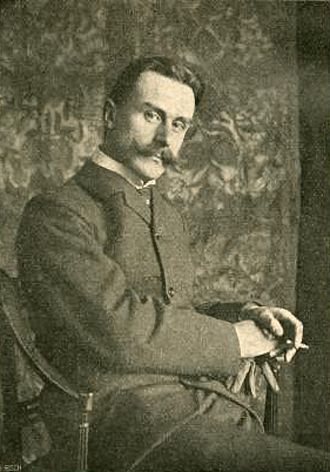
Thomas Mann

Thomas Mann was the man. Cigarrete lit, winter gloves of a gentle-man. Carefully shaped and tendered mustage. Four button suit. Stern wooden chair. Glancing eyes.

Jonh and Tom enter a room. They came together. The room turns and judges the two charecters. Something is on. Everybody knows. They still keep their cool, as the spell has been bound, and the action is just waiting to reveal itself. It will take some time. It’s not loud. Not yet. It’s only intriguing. And sparkling. Nobody else has that chill. Yet the party has been transformed. In an unexpected way. A good way.

That’s how you differentiate writers. The ones that can enter the room and light up the space. And the ones that only do that when they enter into their world. Where everything, every card, every sense of joy, every precision, every spirit, every meaning, spells itself out into the page, while leaving nothing left in real life, but the empty container of curious mind without social skills. As writers, they both trascend, as it’s in reading where you build the immaculate communion of two minds, and evolve into the possibilities of creating yet another story, yet another tale, yet another creative outburst.

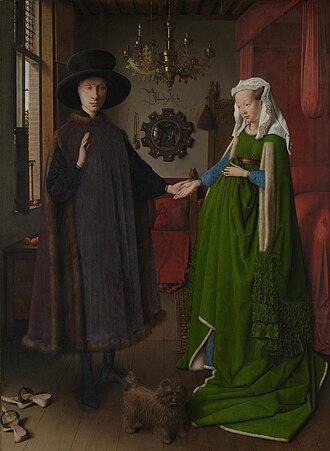
Van Dyke según Panofsky

You can write about anything. Stories, however, represent a different kind of writting. Everyone writes in their own terms. Art too can be narrated. Text lives beyond literature, and it may be printed on any given matter, in any given surface, for any given purpose.

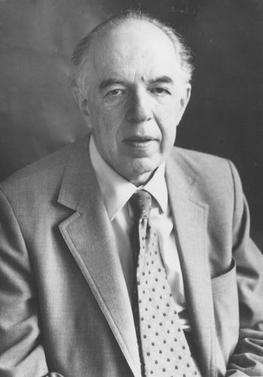
Ernst Gombrich, Art historian

The Story of Art. Gombrich has influence the narrative of art. Up to the point in which the character of Moo Pak understood that these four characters were bound to be mentioned in a stream of thought, at any given time, to transfer a profound reference to something condensed in tiny hint. Context provides the first field of action. If you are outside of it, the sense of it slips by. And you go on. And so does the inintial intention of that given thought. So going back to capture them, is a matter of being able to rewind time. To back up. To read again. To read. For the first time. An author you don’t know, but now have a purpose to pursue.

ALLS

People frightened of silence

Moo Pak ins and out

I’m walking along with this book like a walk in a park with a conversationalist. I’m steping in and out cause I need to come back to it, and then I feel the rush of comming here to write. It’s an exercise I’ve been forced to do by the fact that I cannot jot down a single scribble on the pages, as I am used to, because the book is borrowed. I need to give it back, eventually, as I got it. And it is in impecable conditions.

Nobody imposed this on me. I did. It’s always you who drive things around. In or out. It’s all in your head anyway. And you categorize the exercise. You make it happen so we understand the feeling of where this system is going. The personal system you own set of microcomponents, soul, body and shit… make up for. You are a complete social ecosystem. Yet, you still are just on your own, among the masses of an interconnected society.

So for quite some days I’ve had this urge to go back to Moo Pak to write about this. Silence. Solitude. Being with yourself. But as it turns out, the book has this beautiful constant voice that keeps talking and walking, and there is no stopping. It’s a single thread of a thought that connects logically with the next, and so on, and so forth. Sudenly, I don’t feel alone.

I do the same. This is how I write. No matter the intention. I just show up and start. And I’ve become obsessed with this. It’s time with myself. Alone. In silence. Just meeting the point of interconnectivity with my fingertips, my voice, unheard, within my head. Does anybody knows where this is going? No. And that’s no problem.

The problem is I leave map from Donosti to as a page marker. It’s a bit chunky but it does the job. It does less damage than leaving a pen, which I will avoid doing in this case, as I would like to spill ink, or some shit like that. You know that’s always a chance. Specially with a borrowed item. You are constantly on the verge of messing up. I know. We all know. It’s the pressure of staying consistant, and logical, and sane. We fool ourselves to stay on the game. And it’s there, a little bit on the edge, glancing at the scene.

In any case, what I was trying to say is that every time I go back to that point in the book where I last left my reading, I need to be able to go back to the point where Woo Pak left that last intense message I needed to come back to. To make a point. To deliver this other thought. Writers do that. I’ve heard them say it when they show up in that other state of mind you get yourself into when you are speaking for an audience. And then you are no longer a writer, but also an entertainer. Publicly addressing crowds, sometimes even larger than 9 people.

So when I go back to read I’m not in the page where the last message that signal my writing spirit erupted, so I need to go back to the last two or three pages, in order to get back in track with a stream of consciousness. So I do. And then I wonder what I was looking for. For everything turns out to be truth. Slightly more intense in places I hadn’t wondered upon. And I keep going back, maybe, to find what my past reading found that now is eluding me. And I wonder if I put then, on this second reading, the Donosti map a page earlier than the last time I read, because I’d be already signaling the place where I needed to come back to, to write, not to keep reading.

So you see, Woo Pak becomes like this pleasent conversion of time. I can move back and forth this stream, as time should allow to do, for any given timeline. But we are always so focused on going forward, we sometimes disregard the fact that time also has that negative ride: backwards.

And this also why I don’t feel alone anymore. I found a place in which I can excercise this going back. And I am enjoying myself. In this silent mode. Everytime Woo Pak kicks me out of that book, and into this one.

I keep reading back and back and get entangled with that direction of the book. And I’m already hooked. I’m back to the point that I last wrote about. About typing in a computer or typing in a typewriter. As an exercise to rewrite a single page. Over and over. Until you have cleaned it up. Something I never do. As write directly on the cloud. And almos never edit. Which is my own little purgatory.

It’s the sense of writing. The interconection with reading. How they are both there. The silences. Of the book. But also of this other time: the writing one. Even if it is closer to something you may relate to, like reading a post. Or like reading an actual book. Just to organize your time around something physical. Not just a screen. A real human interaction. I also write on paper. It nos just gives me pleasure, it also sits on a different table than writing on the computer or right into the page with an Olivetti. I used to own a typewritter. Not anymore.

The labour of scribes and editors and printers and proof-readers, [ ] Because of the work of these dedicated people, he says, we can now pick up the words of singular men and women and read them and listen to them and question them and live with them in greater intimacy than we do with our own spouses or partners. For a persona like myself, he says, with no country and no language to call his own, a life without Sophocles and Dante and Donne and Stevens would be intolerable.

Gabriel Jsopivici, Moo Pak

In fact I came into this writing exercise today to speak about the silence in books. The silence in writing. The intimacy of being alright with yourself. How writing and reading is part of it. How the author is aligned with Proust about the kind of special silence books have. And I’ve gone back too far back, to point out he craft of those who rescued the ancient voices of the past. Others burned books and libraries. Entire cultures. Washed away and mistreated by our current western ways, disregarding our infliction of damage in this bluring effect.

The most terrible thing that has happen to people today, he says, is that they have grown frightened ofsilence. Instead of seeking it as a friend and as a source of renewal they now try in every way they can to shut it out.

Gabriel Jsopivici, Moo Pak

This is has grown worst nowadays. Silence is not there anymore. Everyone’s got some source of continuos distraction in the mobile phone. It’s not even a complete song. It’s a message to keep you hooked to a short spasm of blabering. Something intense as pill, or distractful enough to catch your attention. We are switcing channels all the time. Endlessly. Which leaves no space for silence. And that’s not just a thing to miss, but also the source of being alright with yourself. No matter what. Books, silence, writting, it’s all part of the source of inmense power we have refill ourselves. We can bring it up as a routine to heal. Walks. To the mountain. Walks with a friend, with different kinds of friends, to align and talk, and to share the silences in between.

ALLS

On writing from the top of your head

Study on Moo Pak, by Gabriel Josipovici

By Golman

«Only the last paragraph can tell you whether you’ve got the first paragraph right, he said, only the last word can make sense of the first.»

Gabriel Josipovici, Moo Pak

I was handed this book yesterday by Ferran Ràfols, who’s the translator of the book to catalan. The book is signed, and while he thought he had another copy of the book, he didn’t so he made sure to clear things up: «Ei, when you send me that message yesterday, and from the talk we had the other day, I remember I told you about this book. But, bear in mind that I thought I had too copies, but I don’t, so I want I will need it back».

Fair enough. Clarity is very relevant to build trust among people. Besides, I told him that this sort of thing would inspire me to see how to extract from this reading my own personal notes given the circumstances where I will not be able to mark the pages, and doodle the margins with those sactions of my thoughts that populate my persona library, and that are there quitely waiting for me to back to them, and make something out of them.

This way, I’ll be forced to do something else. And this text is what I’ve figured out to produce in order to extract the knowledge from this recomendation, in a time where I’m trying to find myself the vehicle to kick start a narrative with my name on the cover.

So here we are, a couple of pages in, and already get anxious from leaving stuff behind that I wish I would have made a note on. The fact is that the conversation that the narrator is having in the very first page of the book binds me to the idea that I will encounter a place where I will be drawing some lines that connect my mind with both the characters and the author. And I will be pursuing the reverse engineering of a creative process that expells my own demons towards the pages of voices that reasemble the structure of my desired tales. This long battle within.

So I stumbled upon this quote, and I thought about using this format. Other format would have been to make an ilustration, like all those that are stacked within the pages of my notebooks. That’s certainly a way to go about it, but I’m going to take this path of writting it directly in my page, as the narrative is exposing just the opposite of my own process, in at least two ways.

First, the narrator explains that he has given up writing by hand. I actually, a few year back, did the reverse move: I went to handwriting in order to find the expression and tension of my caligraphy, and to be bound to measure of the page, the spaces between the top of the page, the size of my lettering, and the purity of my stroke. While the character gave up writting in order to explore type writting. That is to use a classic Olivetti that could allow him to se the words coming out the page, but also be limited by the capacity of blank sheet of paper. The written printed words out there. From the very beginning. It’s clearly an appealing feature to write and get it right. So he goes about the way in which in order to do so, he has the capacity to keep going, until he gets to the end. And once printed, or once he’s found the mistaken word, sentence of paragraph, starting over from the top of the page provides a second exercise of getting close to the truth. As you copy your own words, but now out of the printed version, the formality and decisiveness of that text no longer presents the doubts those same words bare when they were being thrown into the page. And that’s a beaufiful step forward that I need to revisit as in my personal struggle I need to jump into a new phase: re-reading my own texts and editing them to finally get the worked out version of what I really want to share with the world.

So while his friends insist that the new thing would be to use text processor, from an Apple or a Mackintosh (that provides a clue as to when the character is dealing with this issue), he rather stays within the realm of the typewritter structure, that allows him to go page by page.

At some point I took that detour too. I stopped using word documents to shift-up towards the publishing bit of an online wordpress format. More like the friends of the narrator, I was propelled of the word document to try to get something out there, and the word files were pilling within the folders of oblivion.

So this too is a tension point between Josipovici’s approach and my own. And this how I will intend to find the common links and bridges from my own mindset to his own. And I am using a relevant messenger to transpose these two worlds: Ferran’s advice to do so.

And I’ve made up my mind just now: instead of going on and on, I’ll stop here and work out a single text, as short as around nine paragraphs would allow, to extract a written effect from a quote from Moo Pak. This is my new format. This exercise will allow me to unleash from my own gatekeepers.

ALLS